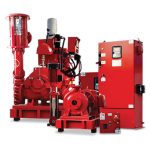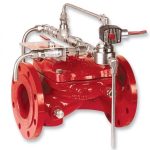










Fire pump In any type and size, they should not only be tested periodically and preferably by the automatic start method, but sometimes they should also be turned on manually. Some say that these pumps should be tested weekly (as stated in NFPA20) and others say that diesel pumps should be tested weekly and electric pumps should be tested monthly. These tests include start-up and functional tests (without water flow), such as starting the car on a very cold winter morning. (pump at rated speed and normal operating temperature) Chapter 5 of NFPA25, entitled Inspection, Testing and Maintenance of Water-Based Fire Extinguishing Systems (1998 edition) contains a complete range of recommended tests and their repetition period. NFPA25 has good guidance on each.
Water flow test
All fire pumps should be tested at least annually under full water flow conditions and their characteristics measured at zero, rated point and maximum output conditions. Due to the fact that the efficiency of the pump may gradually decrease or problems may arise due to temporary damages in the water tank, with the help of the annual water flow test results, these problems can be accurately shown and help to solve these problems before the pumps are needed in emergency situations. Now many factories and industrial and construction complexes use independent contractors who specialize in testing fire pumps. These contractors have expertise in the field of spare parts and how to perform these tests and have achieved good results.
Very large fire pumps are equipped with flow meters so that flow testing can be easily done without wasting thousands of gallons of water per minute. A flow meter is used to measure the flow rate of water in a recirculation system. Fire pumps with rated flow rates greater than 2500 gpm usually have a flow meter for testing, although small pumps may also require a flow meter. Sometimes the installation conditions do not allow the discharge of the total flow rate.
Log in to your account to continue.
Create your account in seconds.